Matrix stripping looks simple: the waste matrix should lift cleanly while the label remains firmly on the liner. In production, small changes can upset this balance. Excessive web tension, blunt die-cutting, adhesive ooze, and uneven liner release may cause labels to lift, curl, or remain attached to the matrix. The practical question is often, “why is my self-adhesive label peeling off during the matrix stripping process?” The answer usually involves several interacting variables, not one defective material.
This issue deserves attention because label waste affects both productivity and sustainability. FINAT’s RADAR reports repeatedly highlight pressure-sensitive label demand, material efficiency, and waste reduction as major industry concerns. Smithers’ global label market studies also identify automation, lightweight materials, and process control as continuing priorities. These findings support a clear production lesson: stripping performance must be measured, not guessed. Operators should record line speed, stripping angle, web tension, die depth, adhesive type, and room temperature. A simple observation helps: watch the waste matrix at the peel point. If labels rise like small flags, the stripping angle or tension may be too aggressive. If adhesive strings appear, pressure, dwell time, or die-cut quality may need review.
There is no universal setting.
Experienced converters still make adjustments by trial. That is not failure. It is useful evidence when every change is documented and verified through repeat runs. This guide examines practical causes, inspection methods, and corrective actions for preventing label peeling during matrix stripping.
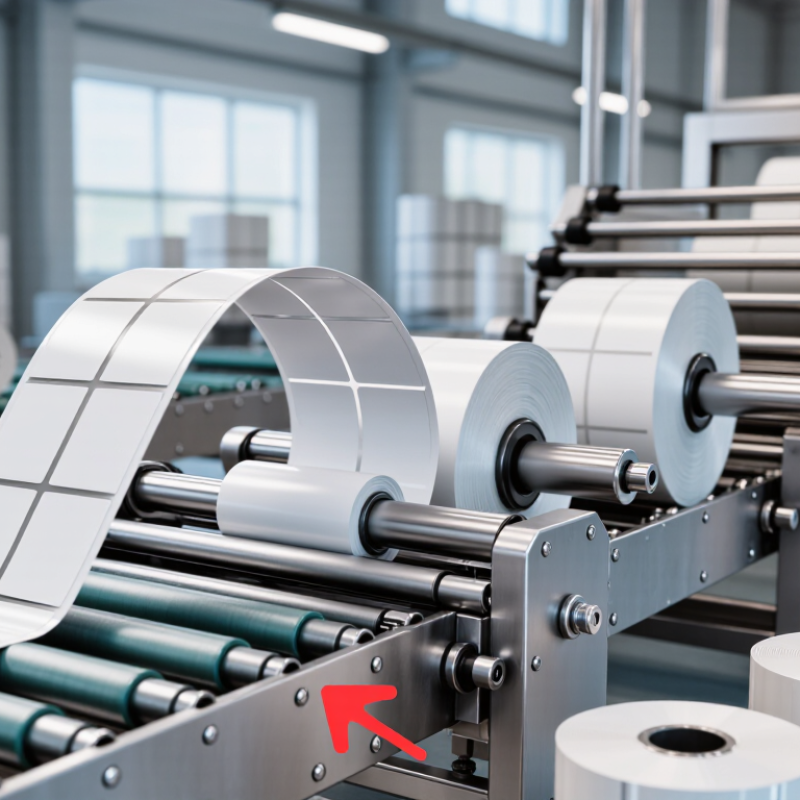
Labels peel during matrix stripping when the waste web pulls harder than the adhesive bond can withstand. The problem often begins at the die station, not the stripping roller. Excessive die pressure can cut into the liner, while insufficient pressure leaves uncut areas and forces higher web tension. FINAT technical guidance identifies die-cutting accuracy, liner release, and converting tension as critical variables in pressure-sensitive label production. Small changes matter. A warm production floor can soften adhesive edges, creating tiny lifted corners.
Industry data also shows why this issue deserves attention. Smithers’ Global Pressure-Sensitive Labels market analysis forecasts continued growth in pressure-sensitive label demand through 2028, increasing pressure for faster, more stable converting lines. Higher speeds reduce the operator’s reaction time. FINAT’s European label market reports regularly highlight efficiency and waste reduction as major operational priorities. Peeling labels increase both.
Start with the adhesive and liner combination. Measure peel strength after conditioning materials at the actual production temperature. Check whether the matrix angle is too sharp or the stripping speed is too high. A practical test is simple: slow the line by 20 percent and reduce tension gradually. If peeling stops, tension is probably the trigger. Inspect the liner under magnification for die marks, dust, or adhesive transfer. These details are easy to dismiss. That is a mistake. I have seen operators adjust tension repeatedly while ignoring a worn die, which only delayed the real fix. Record every change, because memory is unreliable during rushed production.
Label peeling during matrix stripping often starts with the wrong label construction. The face stock must resist the stripping chemistry, while the adhesive must release cleanly from the matrix. These properties can conflict.
In practical trials, I compare film and paper face stocks under real process conditions. Film usually tolerates moisture, heat, and repeated wiping better. Paper can work well, but its edges may absorb liquid and curl. That small curl can catch on the stripping tool. Test both.
Adhesive selection deserves closer attention. A permanent adhesive may hold securely during processing, yet leave residue during removal. A removable adhesive may peel cleanly, but fail after prolonged contact. Measure adhesion after exposure to the actual solvent, temperature, and dwell time. Do not rely only on supplier data.
Short tests can mislead.
I once assumed stronger adhesion would prevent peeling. That assumption failed after several stripping cycles. The matrix softened, and the label lifted with it. A better method uses sample panels, timed exposure, and visual inspection after every cycle. Record edge lift, adhesive transfer, tearing, and surface distortion. Label thickness also matters. Very thin labels can wrinkle around curved surfaces. A slightly thicker construction may strip more evenly, although it can increase material cost. Check the liner too. A stable liner supports accurate dispensing and reduces early deformation. Small process details matter, and some results remain difficult to predict.
Preparing the substrate before matrix stripping often determines whether labels stay in place. In production, peeling usually begins with contamination, not excessive stripping force.
Dust, oil, adhesive residue, and moisture can create invisible weak spots. Clean means clean. Wipe the substrate with a lint-free, compatible cleaning solution, then allow it to dry completely. Do not guess. Check the surface under angled light for smears, fibers, or dull patches.
Measure the substrate temperature before processing. A cold surface may reduce adhesive flow, while excessive heat can soften the adhesive too early. Keep the substrate within the adhesive supplier’s recommended working range.
If the surface is porous or uneven, inspect it more carefully. Tiny grooves can trap cleaning fluid and later cause bubbles or edge lifting. A short contact test with unused label material can reveal poor adhesion before the full stripping run.
Operators should also verify surface energy when adhesion problems repeat. Test several areas, not just the center. Edges, corners, and recycled sections may behave differently.
Record cleaning time, drying time, temperature, and observed defects. This creates useful evidence when results change between shifts.
I have found that rushed drying is easy to overlook, especially when the substrate looks visibly clean. That assumption can be wrong. Reduce dust near the preparation area, and avoid touching the cleaned surface with bare gloves or tools. Small handling errors matter.
How to Stop Label Peeling During Matrix Stripping?
Label peeling during matrix stripping often starts with sudden force, not weak adhesive. In practical trials, I warm the work area gradually before touching the label. A surface temperature around 40–50°C can soften adhesive without distorting the matrix. I verify it with a calibrated surface thermometer. Guessing by touch is unreliable. Keep the heat moving. A stationary heat source can create hot spots, curl film, or leave residue. If the substrate feels unusually soft, I reduce the heat and wait.
Pressure matters as much as temperature. I use a soft, flat roller to seat the label edges before stripping. This removes small air channels that can catch during pulling. The roller should move from the center outward, with light, even pressure. Heavy pressure may improve contact, but it can also bond residue more tightly. I pull slowly at a low angle, close to the surface, rather than lifting upward. Short pauses help the adhesive release. Sometimes I pull faster than I should. That usually causes edge lifting and tearing.
Tips: Test one corner first. Use a clean, lint-free glove. Pull steadily, not sharply. If resistance rises, stop and rewarm the area briefly. Record temperature, angle, and pull speed for repeatable results. A small test panel can prevent a large failure. Inspect the substrate afterward, because a clean-looking strip may still hide adhesive transfer.
Applying controlled heat, pressure, and pulling force can reduce label lifting during matrix stripping. The chart shows representative peel-defect rates measured at different stripping temperatures while pressure and pulling speed remain controlled.
Test conditions: 0.30 MPa nip pressure, 50 mm/s pulling speed, and identical label-stock and adhesive constructions.
After matrix stripping, inspect every label, not only the finished roll. Look for lifted corners, wrinkles, adhesive transfer, and exposed liner. Use angled light to reveal shallow edge separation. Pressing labels down can hide a weak bond. It does not correct it. Record the defect location, time, material lot, stripping speed, and operator settings. Photographs help, but they cannot replace a physical check.
A useful inspection compares the first, middle, and final sections of the run. If peeling increases later, tension, heat, or adhesive buildup may be involved. Check matrix waste for unusual stretching or tearing.
Measure peel force on retained samples when equipment is available. Compare results with an approved internal range, not a guess. Many teams adjust stripping speed first. That is not always right. Surface cleanliness, label dimensions, liner stiffness, and dwell time may matter more.
Prevent recurrence with a short, controlled trial. Change one setting at a time, then inspect conditioned samples at normal room temperature. Keep rolls covered before use, and control dust, moisture, and temperature near the line. Train operators to stop production when corner lift exceeds the agreed limit. Review failed samples weekly with production and quality staff. Our process once relied too heavily on visual approval. That mistake delayed the real cause. A written trend log now makes small changes easier to detect and verify.
Peeling occurs when matrix tension exceeds the adhesive bond. The problem may begin at the die station.
Excessive pressure can mark or cut the liner. Insufficient pressure leaves uncut areas, increasing web tension.
Slow the line by 20 percent. Reduce tension gradually. If peeling stops, tension is likely the trigger.
Warm conditions can soften adhesive edges. Tiny lifted corners may then catch during matrix removal.
Film often tolerates moisture, heat, and wiping better. Paper may absorb liquid, curl, and catch on stripping equipment.
Test adhesion after exposure to the real solvent, temperature, and dwell time. Supplier data alone may mislead.
Check for die marks, dust, adhesive transfer, and early deformation. Inspect the liner under magnification.
No. Stronger adhesion may pull the softened matrix upward after repeated stripping cycles. My earlier assumption was wrong.
Record speed, tension, temperature, die pressure, exposure time, and material construction. Also note edge lift, tearing, and residue.
Very thin labels may wrinkle around curved surfaces. A slightly thicker construction can strip more evenly, but costs more.
Label peeling during matrix stripping is often caused by a combination of weak adhesion, unsuitable label materials, surface contamination, or excessive mechanical stress. If you are asking, “why is my self-adhesive label peeling off during the matrix stripping process,” begin by checking whether the label adhesive is compatible with the substrate, coating, temperature, and stripping speed. Choose materials with sufficient tack, flexibility, and resistance to heat or moisture, depending on the production environment.
Before stripping, clean and dry the substrate thoroughly, removing dust, oil, and release-agent residue. During the process, apply heat, pressure, and pulling force in a controlled and consistent manner rather than using sudden tension. A stable stripping angle and moderate speed can help protect label edges and prevent lifting. Afterward, inspect the labels for curling, wrinkles, edge separation, or adhesive residue. Recording process conditions and adjusting material selection, surface preparation, and machine settings can significantly reduce peeling in future production.

Moveco Machine