Why does label wrinkling occur during the rewinding process? This question appears simple, yet the answer involves several interacting forces inside the converting line. Web tension, winding pressure, adhesive behavior, material thickness, and roll alignment can all influence the final result. A wrinkle may begin as a small diagonal crease near the nip, then travel across the web as the roll grows.
Mike Fairley, a recognized label-industry consultant and author, states, “Consistent label quality begins with controlled web handling.” That principle remains highly practical. A rewinder can run smoothly for hours, then produce wrinkles after a tension adjustment, a splice, or a change in liner humidity. Small details matter.
Uneven tension is often the main suspect. However, it is not always the real cause. A misaligned core, worn roller, trapped air, or excessive nip pressure may create similar symptoms. Thin film labels can stretch visibly, while paper labels may buckle sharply along the edge. The operator may hear a faint flutter before seeing the defect.
This guide examines why does label wrinkling occur during the rewinding process through practical, equipment-focused analysis. It considers tension zones, roller contact, core condition, adhesive construction, and winding geometry. Some explanations may seem obvious. Others require careful testing.
Do not adjust everything at once.
A useful diagnosis records the wrinkle position, roll diameter, machine speed, substrate type, and tension settings. That evidence can reveal patterns. Even experienced operators sometimes blame the material too quickly. The better approach is slower, measurable, and open to correction.
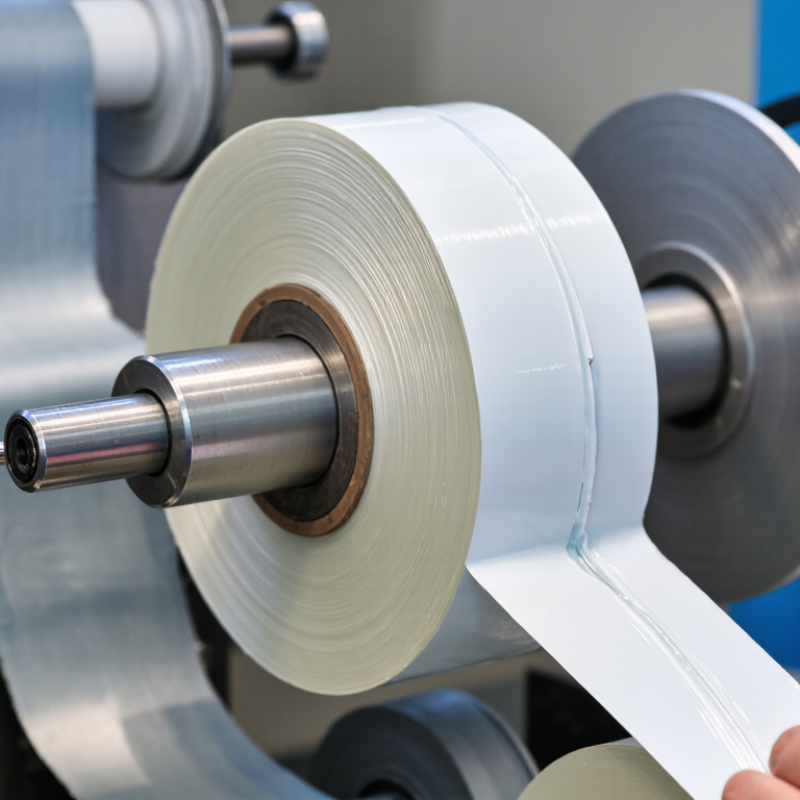
2026 Best Guide: Why Do Labels Wrinkle During Rewinding?
What Wrinkling Means in Label Rewinding
Wrinkling is more than a cosmetic defect. It often shows that web tension, alignment, or material memory is unstable. During rewinding, a narrow label web should travel smoothly across each roller. If one edge moves faster, the web can buckle near the core. The result is a visible ridge, crease, or fan-shaped fold.
In production checks, uneven tension is a common cause. Excessive tension stretches the film, while low tension allows loose areas to collapse. A misaligned roller can create diagonal wrinkles within a few meters. Poorly wound parent rolls may also contain hard and soft zones. These zones transfer pressure unevenly during rewinding. Watch the wrinkle’s direction. Longitudinal lines often suggest tension problems. Crosswise folds may indicate telescoping, roller pressure, or core movement.
Temperature and humidity deserve attention too. Adhesive labels can change slightly as moisture and heat shift. Dust on a roller may create a small lift, then repeat the defect across the roll. I have also seen operators increase tension too quickly. That adjustment sometimes hides wrinkles briefly, but damages the material later. A better inspection records speed, tension, roll hardness, core condition, and wrinkle location. Check the machine when it is cold, then check it again after running. The evidence may not match the first assumption. That is useful.
| Wrinkle Pattern or Symptom | Most Likely Cause | Typical Process Indicator | Effect on the Finished Roll | Severity | Recommended Corrective Action |
|---|---|---|---|---|---|
| Diagonal wrinkles extending from one edge toward the opposite side | Uneven web tension, misaligned rollers, or a web path that is not square to the rewind shaft | One web edge is tighter than the other; the roll may show a telescoped edge | Uneven roll geometry, poor dispensing, and possible edge damage | High | Verify roller alignment, shaft squareness, web tracking, and tension balance across the web width. Re-thread the web if the path is not centered. |
| Longitudinal wrinkles running in the machine direction | Localized tension variation, a bowed roller, uneven adhesive coating, or an uneven substrate profile | Wrinkles remain in the same machine-direction location through several revolutions | Visible creases, inconsistent label application, and potential delamination | High | Inspect the web for caliper variation, check roller runout and crown, and confirm that nip pressure is uniform from one side to the other. |
| Wrinkles concentrated near one edge | Edge-to-edge tension imbalance, web wandering, damaged roll edges, or excessive edge contact with a guide | One edge is compressed or becomes loose while the opposite edge remains tight | Edge tears, crushed cores, unstable rolls, and telescoping | High | Reduce side-to-side tension difference, center the web, inspect guide settings, and remove damaged input-roll edges where necessary. |
| Random, shallow ripples across the web | Insufficient spreading, trapped air, low web tension, or inconsistent contact between the web and the winding roll | Wrinkles appear intermittently and may disappear when speed or tension changes | Cosmetic defects and occasional blocking between adjacent layers | Medium | Check the spreading device, increase tension gradually within the material specification, and confirm that the web enters the nip smoothly without air pockets. |
| Wrinkles become worse as roll diameter increases | Progressive loss of winding hardness, excessive entrained air, or an incorrect taper-tension profile | Early layers appear acceptable, but the outer layers become loose or wavy | Soft rolls, roll deformation, poor storage stability, and telescoping during handling | High | Use a controlled taper-tension program, optimize nip loading, and reduce air entrainment while maintaining enough pressure to consolidate the roll. |
| Wrinkles appear immediately after a splice | Splice thickness, splice angle, excessive splice overlap, or sudden tension disturbance | Defect begins at a repeatable position corresponding to the splice | Localized raised areas, impact marks, and possible web breaks during rewinding | Medium | Use a flatter splice profile, control splice overlap, smooth the splice transition, and stabilize tension before and after the splice. |
| Wrinkles appear only at higher machine speeds | Insufficient nip control, dynamic roller vibration, air entrainment, or a tension-control response that is too slow | Roll quality is acceptable at low speed but deteriorates after speed increases | Unstable winding, web breaks, and increased scrap at production speed | Medium | Increase speed in controlled steps, inspect roller bearings and vibration, tune the tension response, and optimize nip pressure for the target speed. |
| Wrinkles form after adhesive-coated material passes through the rewinder | Uneven adhesive coat weight, adhesive migration, excessive adhesive tack, or incomplete drying | Wrinkle locations correspond with coating variation or remain tacky during winding | Blocking, label lift, adhesive transfer, and poor unwind performance | High | Check coat-weight uniformity and drying conditions, reduce excessive nip pressure, and verify that the adhesive is within its specified processing window. |
| Wrinkles follow changes in humidity or temperature | Dimensional change in the face material, liner, or adhesive caused by environmental variation | Defects increase after material conditioning changes or storage in an uncontrolled area | Roll distortion, label curl, and inconsistent dispensing behavior | Medium | Condition materials before use, keep the converting area stable, and match tension settings to the material's current moisture and temperature condition. |
| Wrinkles are visible on the liner but not on the face material | Liner caliper variation, liner tension imbalance, or a liner that is too compliant for the winding conditions | Defect is more visible on the backing side of the roll | Difficulty separating labels, liner breaks, and inconsistent label pitch | Medium | Confirm liner thickness uniformity, reduce unnecessary tension peaks, and ensure the liner is supported and aligned through the complete web path. |
| Wrinkles repeat at a fixed distance around the roll | Out-of-round core, damaged core surface, roller eccentricity, or a repeating mechanical disturbance | Defect repeats once per revolution or at a consistent mechanical interval | Hard spots, roll eccentricity, vibration, and uneven pressure during unwinding | High | Measure core roundness, inspect core chucks and roller runout, replace damaged cores, and check rotating components for eccentricity. |
| Wrinkling is accompanied by a telescoped roll edge | Web tracking error, uneven winding hardness, shaft misalignment, or unequal tension across the web | Successive layers shift sideways instead of remaining aligned | Roll instability, edge damage, and possible collapse during transport | High | Correct web alignment first, then balance tension and nip pressure. Confirm that the shaft, core, and winding surface are parallel. |
| Wrinkles disappear when the web is rewound in the opposite direction | Directional material memory, asymmetric coating, or a one-sided winding-path condition | Defect changes with winding direction rather than with the material batch alone | Inconsistent roll appearance and direction-sensitive dispensing performance | Low | Compare both winding directions, inspect the coating and substrate orientation, and correct any one-sided roller contact or tracking condition. |
| No visible wrinkle, but the roll feels soft or contains loose layers | Winding tension or nip pressure is too low, or air is trapped between layers | Roll hardness decreases toward the outside diameter; layers can shift under light pressure | Blocking, telescoping, poor roll handling, and unstable unwind tension | Medium | Measure roll hardness across the diameter, increase consolidation gradually, and use a suitable taper-tension profile rather than relying on high initial tension alone. |
| Web breaks occur at the wrinkle location | Crease concentration, excessive tension, sharp roller or guide damage, or a weakened substrate | Breaks originate from the same wrinkle line or edge defect | Production stoppage, material waste, and possible equipment contamination | High | Stop and remove the source of the crease, inspect all contact surfaces for burrs or damage, and lower tension until the web path is stable. |
| Practical reference: wrinkle diagnosis should be based on the wrinkle direction, location, repeatability, roll hardness, web tension, nip pressure, material construction, and environmental conditions. Final operating values should always follow the specific face material, liner, adhesive, core, and rewinder specifications. | |||||
It usually indicates unstable tension, poor alignment, material memory, or uneven pressure.
They often begin at the unwind stand, before the web reaches the first guide roller.
A tilted roll gives one edge more tension. The web then enters the nip diagonally.
Long lines often suggest uneven tension, roller misalignment, or a stretched film edge.
They may indicate telescoping, core movement, trapped air, or excessive roller pressure.
Excessive pressure compresses the web and traps air. Low pressure leaves loose air pockets.
Adjust tension gradually, clean rollers, align the web, and check roll hardness across both edges.
Not immediately. A slower trial may expose the real cause more clearly.
Heat and moisture can change adhesive behavior and material dimensions. Store rolls near 20–25°C.
Record liner type, adhesive, roll diameter, tension, speed, core condition, and room conditions. Small notes matter.
This guide explains what wrinkling means during label rewinding and why it can reduce roll quality, create uneven edges, and affect later application. The key question, “why does label wrinkling occur during the rewinding process,” usually involves an imbalance between label material, adhesive behavior, and web tension. Thin or poorly conditioned materials may deform, while uneven adhesive coating, excessive tack, or inconsistent release can cause layers to stick, shift, or buckle. Incorrect tension settings, misaligned rollers, trapped air, and variations in winding pressure can also contribute to wrinkles.
The guide shows where wrinkles commonly form, including the web edges, center area, splice points, and inside the finished roll. It also presents a step-by-step method for identifying the root cause by inspecting the material, checking alignment, reviewing tension changes, and examining roll hardness. Practical prevention methods include optimizing tension gradually, maintaining clean and parallel rollers, controlling storage conditions, improving adhesive consistency, removing air pockets, and regularly monitoring roll quality throughout production.

 Moveco Machine